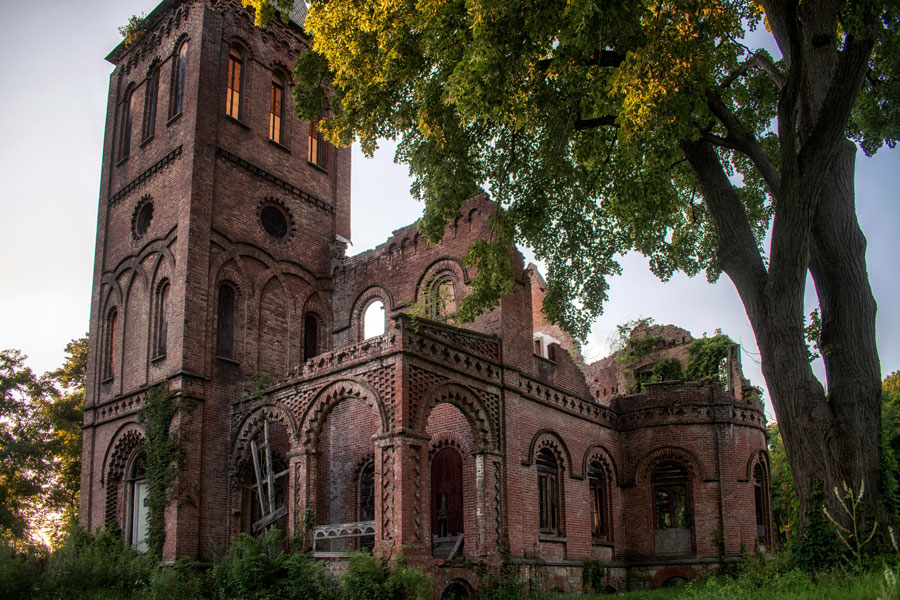
A villa designed to be noticed
Elizabeth Schermerhorn Jones commissioned the house as a weekend and summer retreat. Its Norman-inspired massing, tower, and elaborate brickwork gave it a theatrical profile among the river estates. Edith Wharton, Jones's niece, knew the house as a child.
What remains
Roof, floors, and much of the interior are gone. The surviving walls still show the quality and eccentricity of the masonry, but photographs can flatten the real condition: this is an unstable structure, not an adventure site.
Memory without trespass
Wyndcliffe matters because buildings can remain culturally active after ordinary use ends. It can be studied through archives, federal survey drawings, and lawful photographs without entering the property.